
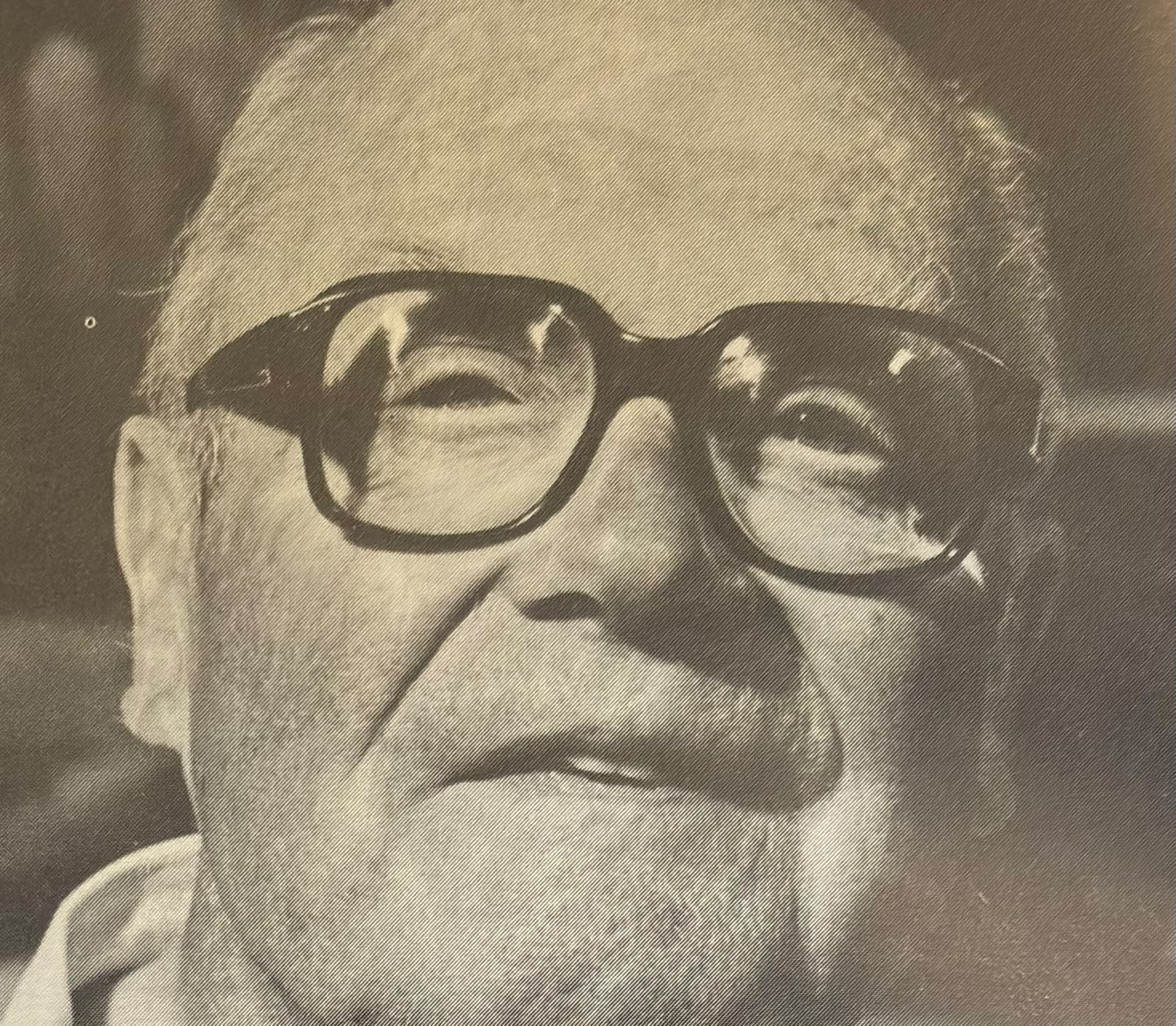
The impact of Sir Hugh Greene, Director General of the BBC from 1960-1969, will be remembered by many. He looks back on the golden sixties with Roma Felstein.
Sir Hugh Greene at 76 is still a force to be reckoned with. He has softened at the edges, but retains that air of power and authority that daunted so many during his reign. Taking over on January 1, 1960 he knew exactly what he wanted. “I created an atmosphere in which talent, of which there was a great deal, could blossom.”
As a journalist, coming out of Bush House, Greene found Television Centre a very odd place. “It was so stuffy.” Two things which he heard in the 1950s persuaded him the BBC had to change: “The head of OBs told me with great pride about an incident which happened at the Cenotaph during Armistice Day. A man had run out of the crowd towards the king. He said he was so proud that his crew, without instruction, had turned their cameras away. I thought what an astonishing institution which could provide news as it happens and think it was such a fine thing to avoid doing so.” (Sacking Tahu Hole then editor of news became his number one priority). The other incident involved Cecil Graves and a man whom Greene knew and respected. “It was the time of the BBC annual reports and Graves had written ‘I always feel uncomfortable in the presence of Mr X; he seems to me to belong to a world of commerce or Fleet Street, not the BBC.’ I could feel that man itching under his pinstripe suit. It was those two things which epitomised to me what was wrong with BBC and what I had to do to change it.”
Greene’s time as DG coincided with the rebellion of the Sixties, a time when everything in society was moving. How much then was his nine year reign one of personal innovation and how much was a product of a changing environment? “I am arrogant enough to think things were different because of me. And as I am perfectly well aware if it had not been for ITV competition nobody would have ever dreamt of making me director general – so I suppose I owe everything to ITV.
“I had a good time at a very good time in broadcasting,” he says, but it is not something he would wish to repeat now – “not with the present form of governors,” says Greene menacingly. “The governors now interfere too much. Real Lives … it would never have happened in my time.”
What would he do if faced with Peacock? “Well we had Pilkington … I don’t believe in the saying ‘these troubled times’ – all times are troubled. When advertising was first broached in my time through the then Post Master General, Anthony Wedgewood Benn, Lord Fulton, the vice chairman in the absence of Lord Normanbrooke went to see Harold Wilson and told him that if the government introduced advertising the whole board of governors and the DG would resign.” Speaking before the Peacock outcome his message to the corporation was: “Make a pre-emptive strike – let it be known before things get too far, if they are not already.”
As an ex-TV news hound Greene criticises TV’s coverage of foreign affairs. “It is impossible from the current output to get a good and clear picture of what is happening around the world.” Greene himself was not without his critics. Two of his most controversial programmes to come under attack were That Was The Week That Was and Till Death Do Us Part.
TWTWTW took viewers by storm. Ratings surprisingly soared as viewers got their first taste of hard hitting political satire. The governors, however, and the acting chairman Sir James Duff were not impressed. Greene, who professes not to have bowed to pressure, pulled the programme. “Firstly it was an election year and I thought a programme like TW3 would be distinctly questioned – you can’t rationalise laughter. Secondly it was not nearly as good as it had been and the team hadn’t kept to an undertaking to the governors to keep away from certain sensitive areas thought to be smutty. Thirdly, Sir James who I liked very much and respected was on the verge of resigning because of the content.”
Greene realises his reign was by no means perfect – there were failures. “Montgomery used to talk about promoting people above their ceiling and I can think of instances where I made some mistakes about people who had done well on one level and didn’t necessarily do well in a different position; that I would say is one of my failures. Some people say I went too far too fast but I don’t think so. I think the BBC needed radical change. They were ready for it. In fact they were longing for it.”
Source: Broadcast 50 Years of Television: 1986
Leave a Reply