
From cinematic visuals and a powerful soundtrack to classic commedy, these are among the most ground-breaking commmercials in the history of British advertising.
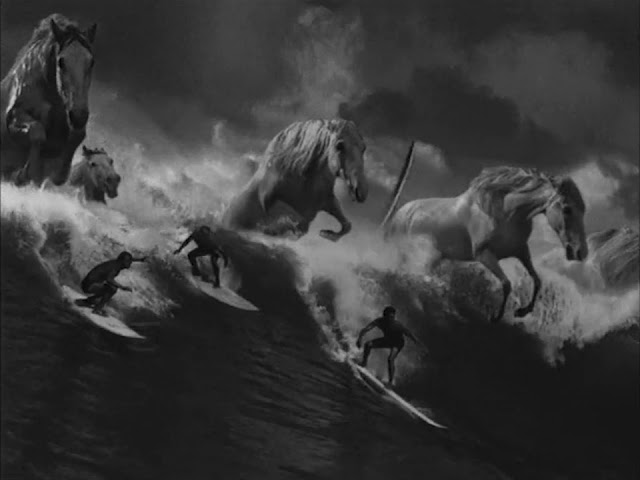
Guinness, Surfer: 1999
So impressed were Channel 4 viewers by the epic proportions of this Guinness commercial that they voted it number one in its 100 Greatest Advertisements programme which aired in 2000. It also came top of a similar Sunday Times poll and, within the UK ad industry, it is the most awarded commercial of all time.
Many single “Surfer” out for the craftmanship involved, from the stunning special effects where powerful white horses crash through waves, to the distorted Leftfield track which adds intrigue to the Moby Dick voiceover: “He waits. That’s what he does… Tick followed tock, followed tick, followed tock…” The ad was created by Abbott Mead Vickers.BBDO.

“It makes you feel as though you have joined a movie halfway through,” says Trevor Beattie, chairman of TBWA/London. “It breaks the formula in every respect and makes all other commercials look like two-bit afterthoughts – a bit cheap and ill-conceived.”
The ad also managed to sell some of the black stuff, with Guinness achieving its highest ever sales and market share at a time when fewer people were drinking beer.
Cinzano: 1978-1983
Although many believe the brand was swamped by the stars (even to the point where it was confused with Martini) the Cinzano campaign featuring Leonard Rossiter and Joan Collins remains one of the most popular in advertising history.
“I can remember these ads more clearly than anything I watched on TV last night,” said Bartle Bogle Hegarty creative director John O’Keefe.

The 10 commercials all revolved around the same running joke – bungling idiot Leonard Rossiter inadvertently throwing his drink down society lady Collins’ cleavage. The ads, which include “Airliner”, “Ski Lodge” and “Tiger’s Head”, were created by Collett Dickenson Pearce who led the golden age of British advertising in the late 1970s and early 1980s.
“Witty, memorable vignettes, an extraordinary piece of casting and a brilliant example of the best kind of copywriting,” said Adrian Harrison, managing director of Streetlight Films.”Not only did CDP manage to make the same joke hilarious in every commercial, they also managed to stuff it full of product information. Who else could get ‘suffused with herbs and spices from four continents’ in without losing the audience?”
Hovis, “Home Coming”: 1974
Until Sir Ridley Scott directed Hovis “Home Coming” in 1974, commercials were typically glossy, brightly lit and, in the words of the director himself, “phoney”.
Scott aimed to bring an element of realism to advertising with his trademark backlit, soft-focus photography, even if, as in the case of Hovis, this occured by accident.

“We were helped by a dull day which meant little in the way of back-light,” said Scott. “So what came out was a rather documentary looking version which seemed to add power to the idea and to the context of the film.” It was a look which terrified advertising agencies at first but then became the benchmark for other directors.
The music, Dvorak’s largo from Symphony no 9, From The New World, is as famous as the ad itself. Says Tony Davidson, joint creative director of Wieden & Kennedy: “The music is phenomenal and makes everything gel – the traditional location, the nostalgia – it pulls at heartstrings but remains based within the truth of the brand.”
Levi Strauss, “Launderette”: 1985
Who can forget Nick Kamen slowly peeling off his 501s to the strains of Marvin Gaye’s I Heard It Through The Grapevine? The opening bars of this track, which shot to number in the charts, are among the most evocative in television advertising history. Those few notes helped convey all the brand value Levi’s could ever wish for: sexiness, cool, rebellion. It overturned the view overnight that LEvi’s were what your Dad wore, and sales increased by a massive 800% by 1986.

It was this ad, created by Bartle Bogle Hegarty, that alerted advertising agencies to the power of a soundtrack. The agency worked closely with the record company to ensure that the single was released simultaneously with the launch of the commercial, which had never been done before.
“Iconic advertising that was the first to realise the enormous potential of choosing the right soundtrack,” says Paul Rothwell, managing director of production company Gorgeous. “The commercial is very much a part of popular culture which very few now manage to achieve.”
Leave a Reply